A victory for sanity. Apple threatening developmental licenses and anyone who used the Unreal Engine was nothing short of mafia-esque, and just as obviously Fortnite being restored to the app store is a matter for Epic's lawsuit against apple.
Yes but Epic still needs those licenses to support those companies and continue to develop the engine. Regardless of the other matter going on, it looks punitive to me. I think when we look back on this event in 5-10 years' time, we'll see this as a serious misstep by Apple.
Yes, I agree with the first half of what you said, which is not was the OP said.
As for the rest, I have seen far too many “this time, Apple is doomed for real” events to agree with your last sentence. Apple could stop selling any device today and still be around in 10 years.
To be clear, I don't think they're doomed, but I think this measure will provide ammunition to those who want to sideload apps and make their own app stores, which is presumably what Epic wants.
I think this has been inevitable for some time, but I think by making this mistake they have they they've accelerated the process and damaged their monopoly far earlier than they had to.
Note: Perhaps I am just seeing what I want to see here. I am hopeful that I and other independent software vendors will be able to avoid their app store one day.
You might be right; in any case we won’t see it for a while.
I think reform of the AppStore is overdue. Some of the rules are counterproductive and with enough of a grey area so that their implementation looks capricious at times. But man, Tim Sweeney is such an arsehole, and Epic’s behaviour is so self-serving...
I think it would have been more self serving for Epic to strike a backroom deal, they've got the clout to do so and it'd probably be better for their shareholders' blood pressure.
On the other hand, if this plays out the way they want, then they get 100% of the income (less overheads) which would be an absolute win for them.
I don't think their motivation matters however - as an ISV getting kicked off the app store is no longer a potential death sentence or a wasted investment; you just need to get smart about how you distribute.
They tried striking a backroom deal first, with a 'and wouldn't it be nice if you gave this to other people as well'.
It didn't seem like any sort of legitimate offer - for one, the "deal" would be that Apple would host fortnite for free, review it for free, and make 0% on in-app purchases. Epic also didn't edit the letter properly and accidentally left an "Android" in rather than changing it to "iOS", so presumably they presented Google with the same offer.
> Tim Sweeney is such an arsehole, and Epic’s behaviour is so self-serving
I have flashbacks of the original iPhone release and the hate it got from established gatekeeping ISPs. "Man, Steve Jobs can be such an arsehole, and Apple's behaviour is so self-serving", but in the end they did the world a favour by pushing back greedy carriers a little bit, forcing them to accept the possibility of distributing largely-untainted smartphones. Kinda the same with iTunes.
Progress is made by unreasonable and often unsympathetic people who are clearly looking after their own self-interest, which ends up actually matching the general interest. I think this is one of those.
Remember when AT&T (“Ma Bell”) was broken up (“Divestiture”) into a bunch of independent companies (regional bells, RBOCs, “Baby Bells”) as Bell Labs spun off into a set of companies? Yeah, the AT&T you see today is actually the largest of those RBOCs (PacBell) that went around and reacquired all of the other RBOCS and changed its name to AT&T (leaving the original AT&T using the name for its continuing backhaul/wholesale operation). Could Apple be forced to divest the App Store and also license other qualified app stores that come along to compete with it? —and that’s just what the courts can do to them. Those koolaide brewers also have drawn the wrath of Congress and angered the Executive Branch by not being so willing to drop a half trillion to setup shop in the desert midwest instead of southeast Asia.
No, it didn't. Verizon is modern Bell Atlantic and also went about buying up RBOCs. Your point is valid, they did just remonopolize, but it's not like AT&T is just AT&T again.
PacBell/Tel had two competitors for the seven dwarfs (RBOCs) that Judge Green created from MaBell, those competitors were GTE and Quest. GTE did pick up Bell Atlantic (and NYNEX) while Quest picked up US West. GTE then merged with Vodafone to become Verizon (and recently bought out Vodafone). Quest became CenturyLink. PacBell simply licensed the retail rights to the original AT&T name.
When the federal government breaks AppStore off of Apple and forces it to compete with qualified independent app stores, they will have learned from that fiasco and probably have language in the settlement (consent decree) that does not allow it to go around buying up the other app stores and eventually change its name back to Apple. Apple without AppStore will be a media company, since hardware sales aren't/can't be enough to sustain growth (unless we find a planet of aliens), especially if we are losing the Chinese market to another cold war.
Incidentally, there is another case precedent: Disney. There is a reason Disney no longer owns Grauman's/Mann's Chinese Theater in Hollywood, its favorite venue --Disney/Paramount lost an antitrust case that prohibited them from owning both the means of production and the manner of distribution (sound familiar?); however, President Trump has recently terminated those 77 year old consent decrees meaning Disney can do what it wants now. Ironically, Disney might become a suitor for Apple's media business if it doesn't workout. For example, NASA and its contractors buy thousands of Macs from Apple but some phat idiot (won't name names) thinks it's a good idea to have an AppleTV+ series about "what if NASA didn't win the space race" wtaf?!
Isn't this still an Epic issue? Basically if Epic delivered their engine to their customers as source code and NOT as a compiled binary couldn't the customers build the engine and include it in their App Store submission? But since Epic is trying to deliver the compiled engine to their customer (signed with their dev keys) thats where the problem comes in?
Epic already does provide source code for the engine. It's on GitHub and access is essentially provided under the terms for shipping any UE based product.
"If your membership is terminated, you may no longer submit apps to the App Store, and your apps still available for distribution will be removed. You will also lose access to the following programs, technologies, and capabilities:
- All Apple software, SDKs, APIs, and developer tools"
I made a Mac app a few weeks ago that got to the front page here on HN[1]. It isn't notarized by Apple since I don't want to pay Apple just so I can give my work away for free that fixes something that shouldn't be an issue in their OS in the first place. When users run the app for the first time, they get a warning[2]. For that kind of popup to happen when anyone tries to use anything by Epic would almost certainly dissuade new users a bit. Currently you can run unsigned code on macOS if you disable some security options in preferences but soon that won't be possible[3]. It's already the case that unsigned code can't run on iOS, so for Epic to develop an engine on iOS they must be able to sign their IPA files so they can actually be installed on a testing iOS device which can only be done through Apple.
Thanks for sharing your experience. I also work on a free utility for macOS that I'm not paying $100 each year to release. As a result, macOS treats that app like it's radioactive.
It's a disservice to users who intentionally download the app to improve their experiences, only to find out that the program is a second-class citizen on macOS, and they need to perform a security ritual to use it. If the users don't know what the ritual is, to them, the app is just broken.
I recognize the writing on the wall, though. macOS isn't a platform to hack around on anymore, it's Apple's platform to extract rents from its developers and users. If your app or use case doesn't fit into that ecosystem, that's just too bad.
Yes exactly. From the perspective of the user, macOS treats you fairly. Apple carefully words everything to shift the blame to developers for things like notarization. The message that appears when apps aren't notarized puts the blame on the developer by saying "This software needs to be updated. Contact the developer for more information". To the user who doesn't know any better it's the developer's fault. Apple takes great care to ensure users never blame something that has gone wrong on Apple themselves.
Users get a good experience on macOS and iOS so they will continue buying Apple devices which also leads to more people switching to Apple devices due to pressures of things like iMessage. Meanwhile developers are essentially forced to agree to Apple's terms to access an extremely significant portion of the market (especially when it comes to smart phones). Those terms effectively censor developer criticism by preventing developers from explaining their situation to users. If developers don't comply, their apps will be removed and their development certificates revoked on all Apple platforms. As a user Apple feels fair, as a developer it's painfully obvious that Apple is abusing their market position. Look at what's happening with Floatplane: https://www.youtube.com/watch?v=1QzHu-sjdB8
Unless things change, I don't think I will choose to purchase an Apple device ever again. But if their market share continues to increase it will be impossible to survive as a developer without releasing for Apple devices and to develop for Apple devices I will be forced to buy their devices. The App Store and everything Apple offers is certainly worth something. Is it worth 30%? Who knows. The market isn't what decided that fee, Apple and all other software storefronts have somehow arrived at that number themselves. With no realistic way for competitors to offer alternative software storefronts on iOS and Android at their own price to compete and bring fees to their true value, we will never know.
How is this any different from Windows? If your code is not signed with an EV code signing certificate, a similar warning will be shown on Windows. The difference is that, that certificate will set you back 500-600 USD a year. Though I believe you can obtain "trusted" status without a cert through people using your software and not reporting it as malware.
Microsoft isn't the only provider of certificates. It's more like the web where there are many authorities, not just one. If Epic were getting their cert from Microsoft and Microsoft retaliated to something Epic did with Fortnite on Xbox by revoking their certificate on Windows, Epic could just switch to a different provider for their EV cert.
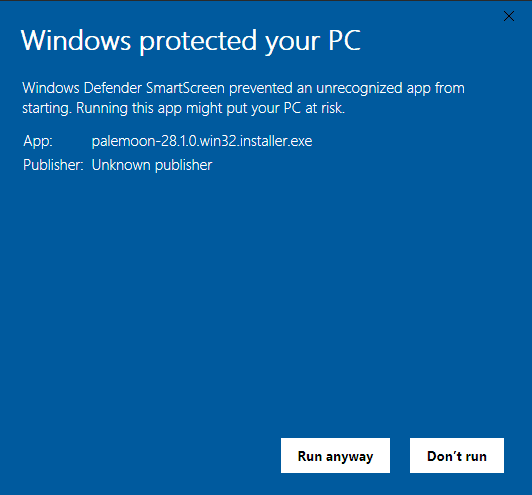
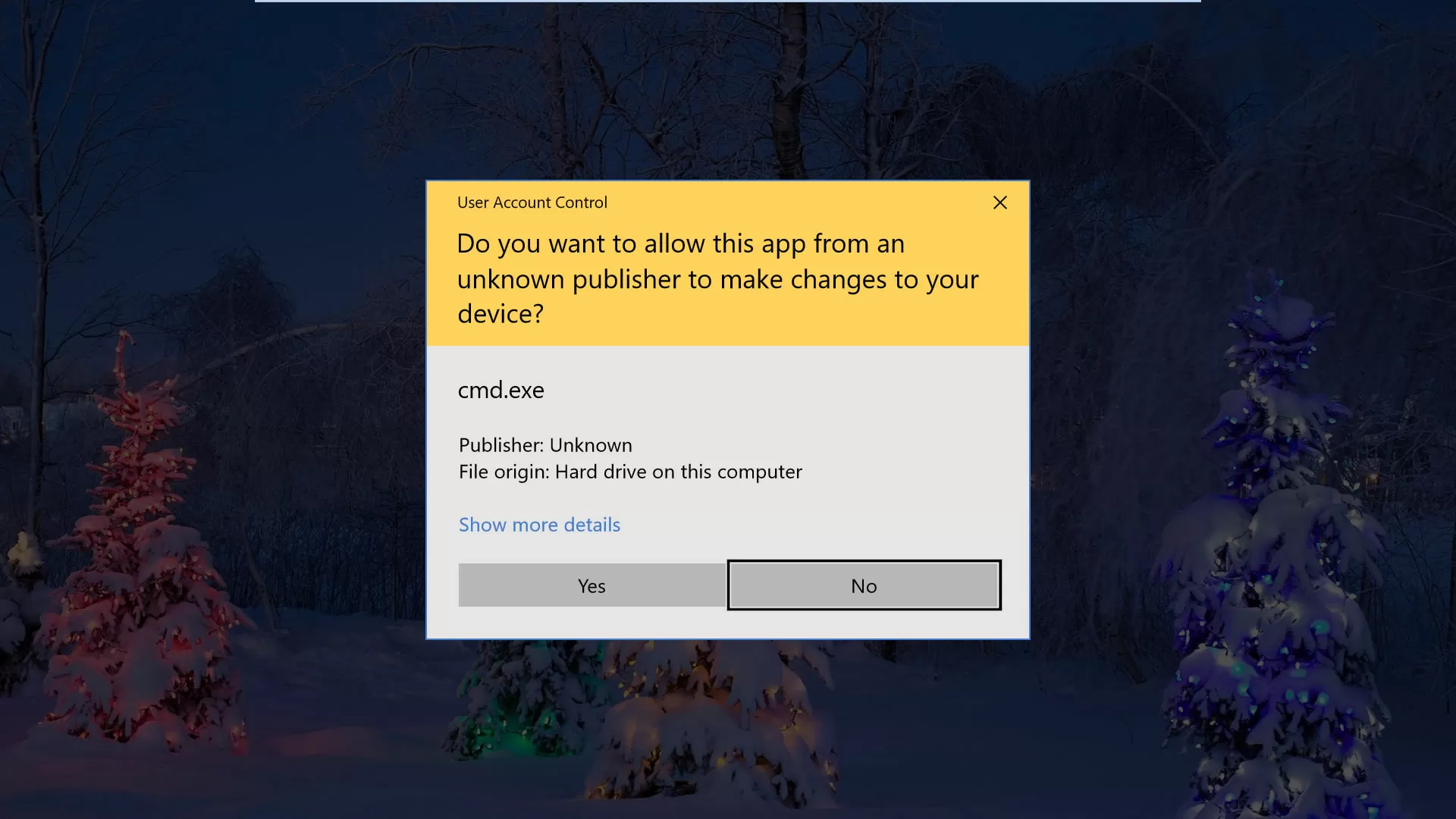
The other difference is the message itself. Windows just displays a warning that the software couldn't be checked by smartscreen.[1] Once the app is used by enough people for the app to be in the smartscreen system the warning will disappear. Users will still see that the publisher is "unknown" though.[2] MacOS directs users to contact the developer that the app must be "updated" even if the only issue with the app is that it isn't notarized. A more fair message would be along the lines of "This app has not been notarized by Apple. Only run the application if you trust the source."
Code signing is intended to verify that the app actually came from who you think it came from. If the certificate for MS Word is unknown or something other than Microsoft you know something's not right and it's either been modified by a third party or not MS Word at all. Apple is using code signing to exert control over Epic Games rather than it's intended purpose to verify to MacOS users that their Unreal Engine in fact came from Epic.
You're saying that they breached their contract - he's just saying that the contract may not have been valid in the first place, thus it cannot be enforced/breached. We don't know if their contract was valid, that's up to the court(thats why this article is here).
It's still an incredibly asanine point for a general discussion because it's true of almost any contract. It's ajin to people who constantly use phrases like "in my opinion" in general conversations, it's already implied by context.
One can agree with one side or the other but this is nothing short of Apple using its dominant position to try and hurt Epic because they got mad. It has nothing to do with kicking someone out for breach of the app store rules. Fortnight and Epic's Unreal engine are two entirely different legal entities. As you could have read in the ruling.
And, as you could have read in the ruling, Apple didn't do anything to the other developer account. They merely sent an email response saying that continued action on Epic's part could result in them terminating their contracts and support. So, you're wrong. It has 100% everything to do with kicking someone out for breach of the App Store rules.
Apple never threatened the developmental licenses of anyone using the Unreal Engine. They said they would remove all Epic access to developer program tools (e.g. beta access to operating systems and Xcode) and to partner programs (presumably for advance hardware testing).
This would have a second-hand effect on Epic's ability to provide timely updates to their engine and remain competitive to alternatives like Unreal on the platform. It also would likely lead to a lot of problems with Epic's Game Store on Mac no longer being properly signed.
It was foolish for Apple to retaliate IMO. I think this example will be used in multiple litigations to paint a picture for jury that Apple operates in bad faith and anti-competitively. I am also certain Steve Jobs emails from the eBook trial fiasco will be coming up.
Apple is likely going down if this goes to trial. Their best interests lie in settling before trial but it doesn't seem Epic is looking to settle.
They threatened the supply chain. Would they do that to a normal developer? If you're a developer and one of your apps is found to violate an app store rule does Apple remove not only that app but also all your developer credentials and licenses? I imagine Apple just removes that app do they not?
I was fortunate enough to watch the Zoom of the hearing - the Apple lawyer claimed that in cases of breach, it is normal for Apple to disable all related developer accounts to limit the offender's ability to 'hide' behind alternate accounts.
In this case, the two accounts in question (the one for Fortnite and the one for Unreal engine), while on paper are separate entities, were paid for by the same person, using the same credit card number - so that was Apple's justification for removing both.
As the order shows, the judge still felt it was overreach.
Most developers just get that app removed (unless they egregiously operated in bad faith). If they then sued Apple, you bet they would get their account suspended in the mean-time too.
> Perhaps it's time for some major app makers to have a day or two where they pull their apps.
Epic's actions with Fortnite were effectively this. They were aware Apple would pull the app, but that them doing so would give them clear standing to sue Apple for the contract terms.
For even a lot of "major" app makers though, pulling their apps off iOS in protest would put them out of business. (Even where Android excels in market share, Apple excels in revenue share by a wide margin.) By being a large multiplatform entity with more reliance on consoles and desktops, Epic is one of the few companies that can afford the hit to pick this fight.
If Snapchat, Facebook, Instagram, Whatsapp, PayPal were all pulled for 2 days at the same time, and then put back up, it would make a huge international stink, global headlines to raise awareness.
Literally Joe Biden would hear about it.
Same day take out an editorial or page-sized ad in the Times.
Apple needs apps as much as apps need them, it just takes enough coordination.
If all those apps pulled their versions down at the same time, Facebook/Paypal/Whatapp could very well wind up in court over antitrust concerns as well.
I agree that a co-ordinated effort could work, however, to cause Apple the maximum amount of brand/financial damage, it should be timed to the release of the new iPhones.
If Spotify, Youtube and Netflix all pulled their apps a day after the release of the next phone, Apple would be in serious trouble that year. It would effectively permanently devalue their phones and by proxy Apple, because consumers wouldn't be able to trust that that it wouldn't happen again. It would certainly spook investors.
Apple freezing developer accounts was out of line but Fortnite was taken off of Google's and Apple's stores because Epic knowingly broke the rules. They introduced "VBUCKS" that bypass in-app purchases.
> and just as obviously Fortnite being restored to the app store is a matter for Epic's lawsuit against apple.
They can easily roll back their TOS breaking update and the game will be available as early as today. The reality is that they broke the rules so they could sue.
> Not a single other developer using UE was targeted directly by Apple.
But indirectly. If Epic doesn't have a developer license anymore, they cannot reasonably support their clients in implementing UE on any Apple hardware (and, depending on the licensing terms, they may not even legally support it...).
Isn’t that an issue Epic has brought in themselves? Their “Fortnight division” has put at risk their “Unreal Engine division”.
Or put another way, they have two products at different levels of the stack and they have consciously chosen to risk one (the game) to leverage all their customer’s of their other product (Unreal Engine) onto their side in this war.
By contrast, with respect to the Unreal Engine and the developer tools, the Court finds the opposite result. In this regard, the contracts related to those applications were not breached.
And then:
The court also finds that "Apple has chosen to act severely, and by doing so, has impacted non-parties, and a third-party developer ecosystem. In this regard, the equities do weigh against Apple."
That's what the judge is ruling is not allowed. There's no basis for it. Apple can't go after an unrelated business because it's having a temper tantrum and feeling spiteful.
The fact that fortnite is built on UE doesn't have any significance here.
They're not going after "unrelated business", though. They cancelled Epic's developer account which is exactly the remediation listed in the agreement for the account. If you violate the terms, your account is suspended. Epic brought this on themselves when they made their move without thinking about how that would affect the rest of their business.
No, they didn't. They responded to Epic threatening to cease assistance for the 2nd arm of Epic if the Fortnite arm refused to comply. Only 1 account was cancelled.
They literally threatened to cancel the second account. This is what the injunction is about, and the judge ruled that Apple can't cancel the second account and prevent Epic from using Mac tools to legally develop Unreal.
You would know this if you read the injunction that is being discussed...
That's not what the judge ruled at all so I'm confused by your statements about reading the injunction. All the judge "ruled" was that Apple needs to maintain the current status quo of their other arrangements until they actually rule on the main cause of the case. If Apple wins, then there's another matter to attend to. If they don't, then the status quo is still maintained and the matter is over. What the judge actually ruled was akin to "You go to that side of the room and you go to the other. Stop hitting each other while I figure out who broke the toy." The judge didn't make any kind of determination on the legality of anything and you can't make a legal judgement on a threat of doing something.
Apple threatened to cancel Epic's second account and cut off Epic from its macOS tools starting Aug 28th; Epic said that unfairly threatened its other lines of businesses and a court should prevent Apple from doing so until the antitrust suit finished (and should also reinstate Fortnite until the suit finished); the judge ruled that Apple cutting off Epic's second account from the Unreal tools before the court case finished was unreasonable and legally prevented it from doing so, but that banning Fortnite was not unreasonable and did not legally prevent it from doing so.
Judges make legal decisions. If a judge says you can't do something, that means it's illegal; judges can rule whether a future action is illegal, including based on a threat, and that's what this injunction does. This injunction references Apple's threat and, ultimately, says that they legally can't do it (for now), just as Epic can't legally force Apple to reinstate Fortnite (for now).
But anyway, as to your original assertion that this injunction is unrelated to Apple's threat to terminate Epic's account with the Apple Developer Program, here's a direct quote from the injunction:
"THEREFORE, APPLE AND ALL PERSONS IN ACTIVE CONCERT OR PARTICIPATION WITH APPLE, ARE TEMPORARILY RESTRAINED from taking adverse action against Epic Games with respect to restricting, suspending or terminating any affiliate of Epic Games, such as Epic International, from Apple’s Developer Program [italics mine]"
Also, re: your assertion that "If Apple wins, then there's another matter to attend to. If they don't, then the status quo is still maintained and the matter is over." — I don't think anyone involved in the antitrust case, including the judge, ruled or believes anything like "the matter is over" and "the status quo is maintained" if Apple is found to be violating antitrust law. The status quo legally could not be maintained by Apple in that case. What exactly Apple would have to do would depend on what precisely the judge ruled, but maintaining the status quo would not be an option.
I mean you can read the court ruling for yourself. The court disagrees with you there for reasons specified. The court does rule that "Epic brought this on themselves" for the Fortnite app on iOS but not for Apple restricting its SDK for Unreal Engine.
No, they didn't. The court ruled in a way to minimize the calculation of damages. Apple may still be able to continue doing what they intended and revoke that partnership but the judge just ruled that they need to keep operating as they have until this is settled so that they don't have to factor in the potential liabilities of both points.
Epic knowingly, intentionally, and publicly defied Apple's rules. In response Apple "threatened" exactly what they threaten every single other company doing the same -- to suspend or terminate your developer accounts if you don't remediate the issue. There is absolutely a basis for it, it certainly isn't "unrelated", and trying to attribute motives like spite or having a "temper tantrum" is baseless nonsense.
The court has blocked it because there could be greater harm in the short term (although that is grossly overblown -- the UE wouldn't stop working in the short or even medium term), but don't be confused into thinking this isn't a completely rote, normal response.
>The fact that fortnite is built on UE doesn't have any significance here.
You understand that Fortnite and UE are made by the same company, right? The canard that it has anything to do with what engine Fortnite uses is absurd noise.
Wow, this site has completely given into the cult of Apple. Thankfully the judge is a reasonable person who is interested in actual harms more than the letter of a TOS.
That's not true. Epic which developers Fortnite isn't the same holding company which developers UE. If Epic's game developers accounts are closed it should have no affect to the Epic accounts for UE.
* Epic Games, Inc. develops Fortnite and has an Apple developer account that it is released under.
* Epic Games International, S.a.r.l. develops Unreal Engine and holds its own Apple developer account.
So if the accounts of Epic Games, Inc. were closed, who cares. If Epic Games International's accounts were closed, then yes that's wrong of Apple to do.
This is a quote from the letter that Apple sent to Epic;
"If your membership is terminated, you may no longer submit apps to the App Store, and
your apps still available for distribution will be removed. You will also lose access to the
following programs, technologies, and capabilities:"
[...]
"- Engineering efforts to improve hardware and software performance of Unreal Engine
on Mac and iOS hardware; optimize Unreal Engine on the Mac for creative workflows,
virtual sets and their CI/Build Systems; and adoption and support of ARKit features and
future VR features into Unreal Engine by their XR team"
That is a statement that Apple made saying they will stop all help they give to Epic getting UE running on all Apple hardware. With the other stuff in the letter it makes it very clear that the problem is not just one for Epic Games, but all of Epic.
Not just Epic. Apple do. If you think Epic Games and Epic International are wholly separate then telling Epic Games "Engineering efforts to improve hardware and software performance of Unreal Engine on Mac and iOS hardware;" would make no sense. It's very clear that Apple are threatening to do things that impact all of Epic in that letter.
What's less clear is whether or not Apple would have actually revoked Epic International's developer accounts. You might like to give Apple the benefit of the doubt, but it's ambiguous enough for a court to issue a ruling that Apple aren't allowed to do that. This is obviously not just Epic catastrophizing if the court agreed with them and ruled in their favor on that part.
Common sense ties them together. While the Fortnite app was in violation of terms, it wasn’t the app itself which violated the terms—it was the corporation.
The problem is that the US judicial system, thanks to its focus on precedent cases no matter how old they are, and "modern common sense" don't always fit together.
> While the Fortnite app was in violation of terms, it wasn’t the app itself which violated the terms—it was the corporation.
Definitely not. If you have multiple apps in the App Store, and one is removed for violating the terms, the rest should not be removed, since the others didn’t violate those terms.
But it is effectively the same company though; controlled by the same principals.
That would be like Google in Mountain View claiming that they don't avoid paying tax and they are the good guys, but Google SA Netherlands & Ireland who are the assholes who scam countries out of their share of tax revenue (The Dutch Irish sandwich tax loophole that they use).
OK, but please don't post a personal attack with zero information. Instead, post information with zero personal attack. Then the rest of can learn something. The problem with berating someone for being ignorant—even if they are ignorant—is that it poisons the commons. (Edit: besides, of course, it not being nice.)
Apologies. The injunction ended up passing such that the tooling was not in fact revoked by Apple.
Epic relies heavily on deploying Fortnite in order to test the Unreal Engine at scale. Fortnite itself is, in some sense, the test bed from which many improvements and fixes are carried back to the mainline engine. Any studio or publisher relying on the Unreal Engine to deploy to iOS or MacOS would be more or less immediately effected, especially given the volatility of Apple's APIs.
Sure. It's honestly not even a stretch. Any studio that depends on UE4 to deploy to Apple hardware would have been affected if the injunction did not go through. If Epic doesn't have access to tools for UE4 or even just Fortnite (which is used to test UE4 in the wild), that means we have to spin up an internal team dedicated to the maintenance of iOS/MacOS features. People underestimate just how vast the surface area is for a game engine interoperating with the platform, and all features currently in progress would need to be manually ported/tested (file i/o, rendering, audio, networking, changes to the store API, notifications, etc). It's monumental and for many studios, not something anyone budgeted for.
Huh, Apple said it would disable Epic's developer accounts? They never threatened anyone using Unreal Engine, and I don't believe they specified UE Developer accounts.
We can only speculate that UE Developer accounts would have been terminated as we don't really know if Apple was going to terminate those too as they belong to a separate company according to the court documents.
Come on. “We’ll remove your license if you keep misbehaving” is in no way similar to “we’ll go after your users and remove their license”.
It’s a threat in the long term, if Epic and Apple cannot negotiate something satisfying (which they will eventually, there’s just too much to lose for both of them), but let’s keep some perspective.
It's a chain of events. If Epic can't develop on iOS or MacOS, they can't continue to work on Unreal, which makes it effectively an abandoned product for others. Yes, they can still use it, but it would be basically EOL. That was the point in threatening to revoke Epic's license to develop on the platform, and the danger in the increasing monoculture inside Apple. You can only use these specific ordained tools, and they control access to the tools.
I don’t disagree with you, but again, they are not taking away anyone’s license apart from Epic’s. This is a fact, and there is no way around it. Taking away Epic’s license will have effects on other developers, but this is not the same as revoking their licenses.
The OP was not about a constructive discussion of the consequences of that, it was about Apple going after other developers. Which is factually wrong.
Taking away and revoking are the same. The legal work is revoke, they're revoking Epic's license to use MacOS and iOS development tools. That was beyond the scope of the violation, which was an App Store rule violation. The goal of that move was to prevent Epic from even developing non-App Store content, which I don't think anyone could not foresee it affecting other developers, which I'm fairly sure was the intent. I think they overstepped their contractual recourse for the intent of trying to force epic back to the table, because Epic wouldn't want to lose all their iOS customers.
> Taking away and revoking are the same. The legal work is revoke, they're revoking Epic's license to use MacOS and iOS development tools.
Sorry, my sentence was poorly worded. They threatened to revoke Epic’s license, not the other developers’ (which, again, is what the OP claimed and is specifically what I disputed).
I think they did go overboard with the intent to push Epic to settle, yes. And Epic were ready for a mud fight and called their bluff. It looks like the move was a warning, though, and I don’t think they really would do it, at least not for long: they know how important the Unreal Engine is for the platform. If an agreement is found quickly, the impact on others developers is nil. At least in the short term; this brings trust issues over the longer term.
They threatened to effectively revoke other developers licenses. Its plainly clear that if Apple blocks Epic from being able to continue to work on UE for iOS and macOS, they would affect other developers that are currently using Unreal Engine and have not breached Apple's terms. While Apple was not threatening to directly revoke those developers license, the net effect would have been equivalent. This is why the court ruled that Apple cannot currently do this. It's not necessarily because Apple is actually doing something wrong, but because during this litigation, such actions which may not be directly pertinent to the litigation, may have negative effects on unrelated parties.
The court isn't saying Apple is wrong for threatening to block Epic fully, including UE. The court is saying that doing say _may_ not be legal and thus Apple should hold off on it until the court has had time to deliberate the issue. It is only prudent of the court to work to reduce the variables in this situation and to prevent potential harm to innocent parties.
If Apple does not allow Epic to develop Unreal Engine, and Unreal Engine 5 is subsequently not released for Apple computers, that feels like a substantial "threat to anyone using it" to me.
The effects are similar. iOS 14 will be out soon. Epic needs to prepare Unreal Engine to be compatible with it. How can they do this without any developer tools?
No, the effects are not similar. If Apple removed the developers’ licenses, they could not put anything on the AppStore. If an update to the Unreal Engine gets delayed (I have no doubt it will be resolved at some point), then the current version keeps working on the OS on which it was tested, and the developer’s other applications can still be bought.
Now if only the courts would apply the same "sanity" to, say, Uber threatening to fire all its drivers if they're subject to regulation. Not just in california, it's been a repeated thing, they used their employees as leverage when they were threatening to take their ball and go home if Dallas made them do background checks too.
The sad part is that Epic's tactics are nothing out of the ordinary for these silicon valley giants, they love using innocent parties as emotional leverage in a fight to pad their profit margins by another couple percent.
> Uber threatening to fire all its drivers if they're subject to regulation.
Do you mean Uber threating not to hire all it's drivers? Right not they're not employees and they all have become them that's a very different process.
What exactly is sane about figuring out how to make 200,000 contractors full-time employees inside of a week? I don't think there's a company in the world that could pull that off.
If a company says, "hey, we're a marketplace" and a court says, "actually, you're not" then the company has to figure out how to adapt. There's change and an emotional toll to the drivers in that scenario whether they become employees or not.
> What exactly is sane about figuring out how to make 200,000 contractors full-time employees
There is no requirement for them to be made full-time employees, just employees, and even if the law was unclear before the Dynamex decision, they've had the requirement under that decision for almost 2.5 years. And they've known about it, because they've been actively lobbying to change it, lobbying for Dynamex to be legislatively reversed, lobbying for an exception when it was clear that instead of reversing it the legislature planned to codify it in AB5 and also lobbying against AB5, and finally funding a ballot referendum to repeal AB5. All of that says that they understood the rule, and how it applied to them, for quite a long time.
California Assembly Bill 5 was signed into law last September and was clearly a "Going to Happen" event for at least a year prior.
There's no surprise here. Uber had plenty of time to figure out how to deal with this. And they did: they aren't dummies, this was their plan. Their considered decision was that it was in the best interests of their shareholders to play brinksmanship games with their employees' livelihoods instead of make a good faith effort to comply with state law.
Rulebreaking is, after all, part of the corporate culture at Uber, and it always has been.
> California Assembly Bill 5 was signed into law last September and was clearly a "Going to Happen" event for at least a year prior.
And, on top of that, merely (as relevant to Uber and Lyft; it also added some exceptions that aren't relevant to them) codified the rule the California Supreme Court handed down in Dynamex on April 30, 2018; so the “one week” is off by about 121 weeks or so.
If Uber shareholders thought that they were walking away from all revenue in the state of California their shares would tank. We all know this is brinksmanship. I know it. You know it. They aren't leaving CA. The goal here is to get the "other side" to blink and adjust the rules so they can continue to operate. But at the end of the day Uber isn't abandoning the California ride share market to its competitors. Be real.
Uber is using their weight to get what they want, because they know we want them to continue offering service. This is actually quite a bit like having a raise negotiation at work. I don't see their goals as evil, either, simply at odds with the state.
Their shareholders likely suspect California will capitulate. Though it is hard to do research over whether their drivers actually want this, generally the information I see indicates they'd prefer to remain contractors. Yes, some of this is paid for by Uber. I imagine some of the content I read was also paid for by the opposition. But it seems like no matter how you cut it, the drivers generally want to remain contractors, and definitely do not want ~their livelihood~ an income source threatened either way in the midst of a pandemic.
It’s still a negotiation tactic. Would shareholders be happy if the entire business model changed? There are other freelancers that aren’t happy with the laws.
In the sentence to which I replied, the antecedent to "that" (in "That’s a perfectly logical thing to do") was not "negotiating" it was "leaving the state".
I genuinely can't follow your point. These goalposts are moving too fast, sorry.
And now because of the laws making freelance harder, truck drivers who want to stay freelance are having to move out of California and some writers who are doing freelance writing are also finding it difficult.
Companies shouldn’t be in the position of offering “benefits” to employees. No sane first world company ties health insurance to your employer.
Companies shouldn’t be in the position of offering “benefits” to employees. No sane first world company ties health insurance to your employer.
It's inexplicable to me that both employers and employees seem mostly fine with the current insanity. Do business owners enjoy having to be health insurance brokers? Do employees enjoy having their insurance provider change every few years and having very little choice in policies?
unfortunately any time anyone brings up medicare for all there's a huge pushback from half the country, so yes, people do mostly "like their current insurance" in practice. Or at least like it enough to not want to change the system.
(and no, "just have everybody buy their own policy" is not a realistic answer, virtually every society addresses this on a public policy level because individual purchasers simply don't work well.)
So, if you want your weird gig economy "independent contractor" nonsense, push for medicare for all, it's pretty much that simple. That's the only way having wage slaves be independent contractors isn't going to result in an immediate and massive drop in the quality and availability of health care. But oops lolbertarians don't like that either, they just want to be able to pay someone $0.50 per hour because "free markets are better".
I’m actually also against raising the minimum wage for the same reason. Businesses shouldn’t be responsible for providing a “livable wage”. A livable wage for my son staying at home isn’t the same as a single mom with three. The company should only be responsible for following the law and paying people what the market demands and paying taxes. Both the tax laws need to be changed to make sure that all companies pay “enough” and the Earned Income Tax Credit needs to be increased and easier to get throughout the year.
Until the current administration, both Republicans and Democrats supported increasing the EITC.