Correct. This is a classic security vs convenience tradeoff. I mention that trade off on the landing page, PanicLock vs Shutdown
> Use shutdown when you can, PanicLock when you can't. Shutting down is the most secure option—but when you need your Mac locked now and you'll be back in five minutes, PanicLock is your answer.
*PanicLock*
- Fast "oh shit" button
- Lid closed when in transit.
- Instant lock (1 second). Disables Touch ID immediately
- Preserves your session
- Back to work in minutes
*Full Shutdown*
- Maximum security
- Purges encryption keys
- Fully locks FileVault
- Takes time to shutdown & restart
- Kills your session
The argument is not that only designers can design, nor that everyone should design like a designer. It’s to not confuse shopping for or generating generic solutions with the activity of problem solving. Per Alexander, trivial problems, those that can be solved without balancing interactions between conflicting requirements, are not design problems. So, don’t worry and just pick what you need and like!
Quite often temporary roadworks signage uses something "off brand" like Helvetica, and I actually want to deliberately break the temporary speed limit out of spite.
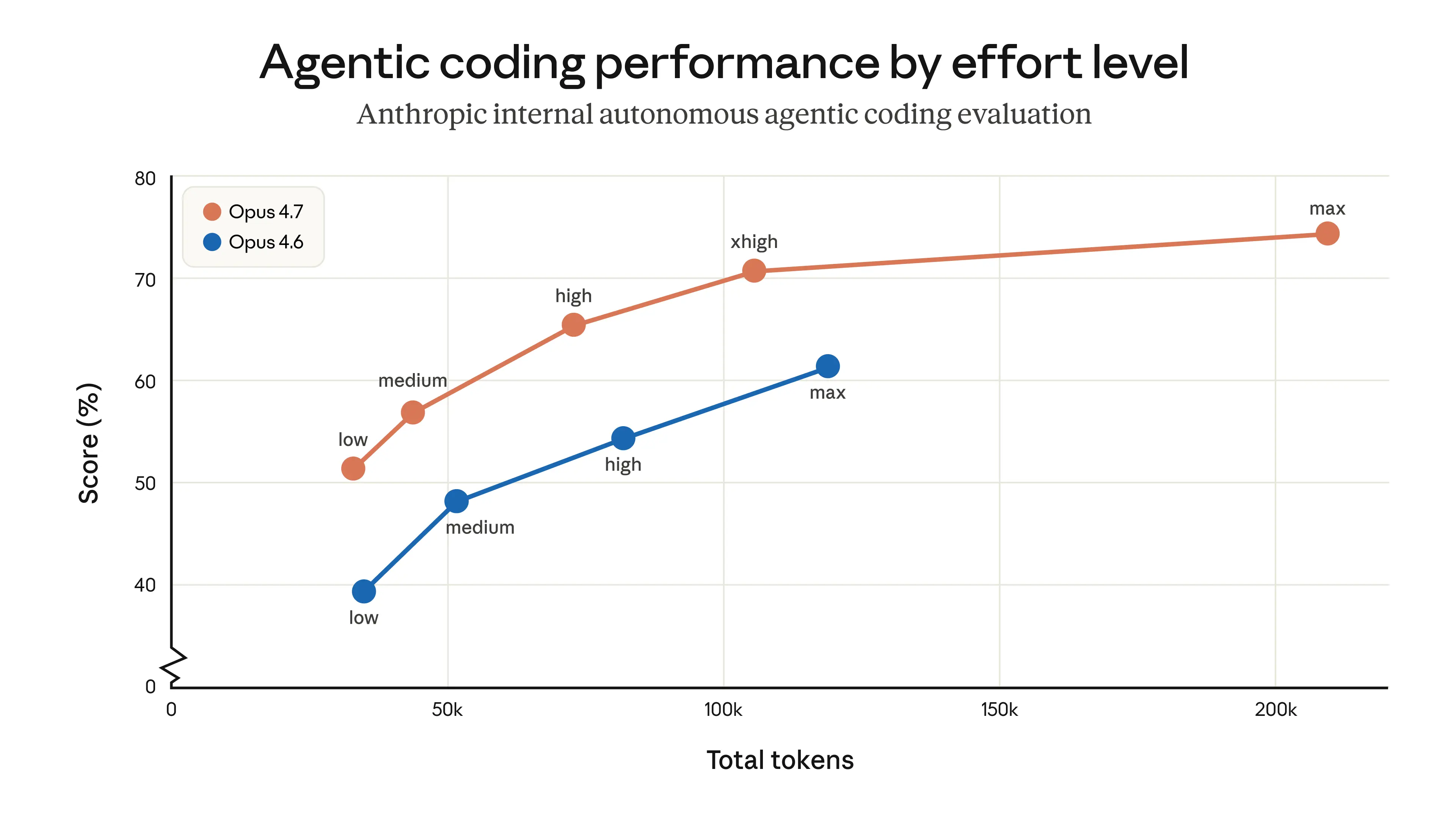
Do they review the code? Because in my experience using Claude Opus 4.6 generates code that would be buggy and the tests would be written agains that buggy code with wrong assumptions that certainly would pass with flying colors.
It is only when you look closed you get to know what the hell has happened!
Just finished eating instant ramen so I feel entitled to comment. I like the design! Just a tip, hide the 'Most reviewed this week' section when it's empty
The incenter is more complicated to calculate using the coordinates, and I officially hate anyone that chose the incenter for this operation. Anyway, I'm very confused because I expect the atractor to be symmetric. I'm wondering if it needs more iteration to get close enough. It looks like an interesting problem, but as I just said, calculating the coordinates of the incenter is a complicated.
Let's not conflate eugenics with gene editing or "designer babies." On the contrary, there is little overlap between eugenics and any of the three other topics, but for the vaguest vernacular sense.
"One session" is not a very interesting unit of work. What I am interested in is how much less work I am required to do, to get the results I want.
This is not so much about my instructions being followed more closely. It's the LLM being smarter about what's going on and for example saving me time on unnecessary expeditions. This is where models have been most notably been getting better to my experience. Understanding the bigger picture. Applying taste.
It's harder to measure, of course, but, at least for my coding needs, there is still a lot of room here.
If one session costs an additional 20% that's completely fine, if that session gets me 20% closer to a finished product (or: not 20% further away). Even 10% closer would probably still be entirely fine, given how cheap it is.
Venus seems like a wonderful place to live, relatively speaking.
At the right altitude where you can "float" on the ocean, it's a pretty comfortable temperature and there's plenty of solar energy but you're shielded from the solar radiation. So, long term, your body will still work, assuming you can solve "the other problems."
Of course, the down-side is that there's nothing to stand on and probably more importantly, there aren't many useful materials to work with besides tons of carbon, oxygen, and nitrogen. Not much hydrogen there, so not much water, which probably is the biggest problem. One of them, anyhow. Also, there's probably not a whole lot to do besides float (zoom, actually) around and slowly go stir crazy in your bubble.
But relatively speaking, it's way nicer than living in a hole on mars where you'll slowly die from gravity sickness, or radiation poisoning, or whatever.
I find it a lot more useful to dive into bugs involving multiple layers and versions of 3rd party dependencies. Deep issues where when I see the answer I completely understand what it did to find it and what the problem was (so in essence I wouldn't of learned anything diving deep into the issue), but it was able to do so in a much more efficient fashion than me referencing code across multiple commits on github, docs, etc...
This allows me to focus my attention on important learning endeavors, things I actually want to learn and are not forced to simply because a vendor was sloppy and introduced a bug in v3.4.1.3.
LLMS excel when you can give them a lot of relevant context and they behave like an intelligent search function.
I recall an article from a long time ago that basically said “astronauts report” the moon smells like spent gunpowder and outer space smell like… I think it was ozone.
What they were actually reporting was the smell of the airlocks after they returned from their excursions. The moon has no atmosphere, so it has been accumulating dust from billions of years of asteroid impacts that have never come in contact with oxygen. Many of the chemicals in the dust are oxidative and so when it is exposed to air for the first time it rapidly oxidizes just like gunpowder!
And I think the outer space report was from space walks, and the explanation was that the first time the airlock itself was exposed to hard vacuum, the surfaces of the airlock would have a reaction that left a scent of ozone.
That should be read as "when the application is (downloaded and launched)".
If it were meant as "when the application is downloaded and every time the application is launched" it would probably have been written as "when the application is downloaded or launched".
Also, there would be no point in mentioning downloads if that was a separate check because the app developer cannot request the signal upon download because their app is not running then.
The most reasonable conclusion is that the app must check the first time it is launched.
No, they have "attention". There is unique logic going on in the deep layers of the neural network.
Even the standard introductory exercise artificial neural networks, handwritten digit recognition, already shows deeper understanding. These simple networks take in raw pixels and somewhere in the many layers recognize "curves" and "edges" and then "circles" and "boxes" and whatnot and eventually "digits".
I think there's a genuine debate about whether or not this is a form of intelligence. I think the oversimplified argument of them just being stochastic sentence machines mostly comes from people who don't understand how they work. But I also think there's a much more nuanced version of this argument offered by people like Chomsky that should be taken seriously
Because the people making purchasing decisions for SAP and Salesforce are not people who spend any substantial share of their time using it directly or care about the UX.
We’re using smolmachines to create environments for our agents to execute code. It’s been great so far and the team is super responsive. The dev ergonomics are also great.
Each NASA center maintains in-house engineers and scientists, if for no other reason than to oversee and critique contracted work.
But in reality they do significant amounts of directed research using "burden" funded research for their on internal needs, and grant work for NASA and other agencies (like DOE).
I worked at JPL, and worked with folks at Ames for various reasons. Both centers try to carve out enough internal time to research new mission concepts, new ways of accomplishing existing mission concepts, or new basic technologies that have dual use for missions/commercial appliations. All of this would qualify as basic research similar to what would happen at Caltech or Stanford, the nearby official/unofficial partners.
I attended all kinds of conferences and agency-level meetings with researchers from many other agencies / nasa centers as well, all mostly aimed at finding out how to better explore space (new missions), or improve our existing exploration capabilities, either with new or by adapting existing tech.
NASA has an entire reporting pipeline called "New Technology Reports" that makes all of this research immediately public, and a deep tradition of spinning off commercial businesses to carry it forward if it turns out to be a good idea.
None of the non-AWS copies of S3 implement exactly the S3 protocol. And even if they did, the next update -- coming at any arbitrary time -- would invalidate the full compatibility.
Or effective decontamination performed in the airlock. There was a recent demonstration of an electrostatic repulsion device reducing dust on suit fabric which might help with sticking. And an air shower like used for clean rooms does not seem too far out.
Interesting app, I have a weird bug I'm seeing with the homepage, when I tab between the chapters, it lags a bit then doesn't actually proceed to the next chapter until I press again