Mine is downright primitive compared to all of the ones the rest of you are posting, being a command line program in C that I originally wrote around 1986, probably for THINK C on my Mac Plus.
Here is the source code [1], only updated to compile cleanly with a modern C compiler and not to depend on any libraries or functions that were specific to THINK C, plus one bug fix and some reformatting.
Here are some usage examples:
  $ ./chord
  c
  C:  C E G
  <3>|-----|-----|-<5>-|-----|-----|-----|-----|-<1>-|-----|-----|-----|-<3>-|
     |-<1>-|-----|-----|-----|-<3>-|-----|-----|-<5>-|-----|-----|-----|-----|
  <5>|-----|-----|-----|-----|-<1>-|-----|-----|-----|-<3>-|-----|-----|-<5>-|
     |-----|-<3>-|-----|-----|-<5>-|-----|-----|-----|-----|-<1>-|-----|-----|
     |-----|-----|-<1>-|-----|-----|-----|-<3>-|-----|-----|-<5>-|-----|-----|
  <3>|-----|-----|-<5>-|-----|-----|-----|-----|-<1>-|-----|-----|-----|-<3>-|
  c7
  C7:  C E G A#
  <3>|-----|-----|-<5>-|-----|-----|-<7>-|-----|-<1>-|-----|-----|-----|-<3>-|
     |-<1>-|-----|-----|-----|-<3>-|-----|-----|-<5>-|-----|-----|-<7>-|-----|
  <5>|-----|-----|-<7>-|-----|-<1>-|-----|-----|-----|-<3>-|-----|-----|-<5>-|
     |-----|-<3>-|-----|-----|-<5>-|-----|-----|-<7>-|-----|-<1>-|-----|-----|
     |-<7>-|-----|-<1>-|-----|-----|-----|-<3>-|-----|-----|-<5>-|-----|-----|
  <3>|-----|-----|-<5>-|-----|-----|-<7>-|-----|-<1>-|-----|-----|-----|-<3>-|
  c#m
  C#m:  C# E G#
  <3>|-----|-----|-----|-<5>-|-----|-----|-----|-----|-<1>-|-----|-----|-<3>-|
     |-----|-<1>-|-----|-----|-<3>-|-----|-----|-----|-<5>-|-----|-----|-----|
     |-<5>-|-----|-----|-----|-----|-<1>-|-----|-----|-<3>-|-----|-----|-----|
     |-----|-<3>-|-----|-----|-----|-<5>-|-----|-----|-----|-----|-<1>-|-----|
     |-----|-----|-----|-<1>-|-----|-----|-<3>-|-----|-----|-----|-<5>-|-----|
  <3>|-----|-----|-----|-<5>-|-----|-----|-----|-----|-<1>-|-----|-----|-<3>-|
You simply type chord names, and it shows you what notes are in the chord and where you can find them on the guitar fretboard. The first example is a C chord. It tells you the notes you want are C E G. In the diagram a <1> means that is a place you can play the root of the chord, a <3> is the third, a <5> is the fifth. For the C chord, then, we see that on open first string would give us <3>, the third fret <5>, the root is on the 8th fret, and the <3> is also on the 12th fret.
Chord names are the root note (with # for sharp or b for flat), and modifiers 'm' for minor, '6', '7', or '9' for a 6th, 7th, or 9th chord. (I have no idea why I did not include diminished chords).
If a line starts with '-' it is a command to change settings. Commands are "-cN" to set a capo on the Nth fret
Here are the commands. "-cN" for a capo on the Nth fret. "-t<notes>" to set the tuning for each string, where <notes> is a list of 6 note names (which can each be followed by # or b). "-Td" or "-TD" for D tuning. "-sN" to transpose by N half-steps (N can be negative). "-n" to switch to a narrower display and "-w" to switch back to normal. Narrow display looks like this:
  C:  C E G
   3 |---|---|-5-|---|---|---|---|-1-|---|---|---|-3-|---|---|-5-|---|
     |-1-|---|---|---|-3-|---|---|-5-|---|---|---|---|-1-|---|---|---|
   5 |---|---|---|---|-1-|---|---|---|-3-|---|---|-5-|---|---|---|---|
     |---|-3-|---|---|-5-|---|---|---|---|-1-|---|---|---|-3-|---|---|
     |---|---|-1-|---|---|---|-3-|---|---|-5-|---|---|---|---|-1-|---|
   3 |---|---|-5-|---|---|---|---|-1-|---|---|---|-3-|---|---|-5-|---|
It's always amusing to look at one's old code. Much of it seems like it was written by someone else. For instance, I see a lot more spaces around punctuation than I would use today. I think that is probably because the editor I used back then did not have syntax highlighting, so extra space was needed to make sure you didn't confuse consecutive tokens.
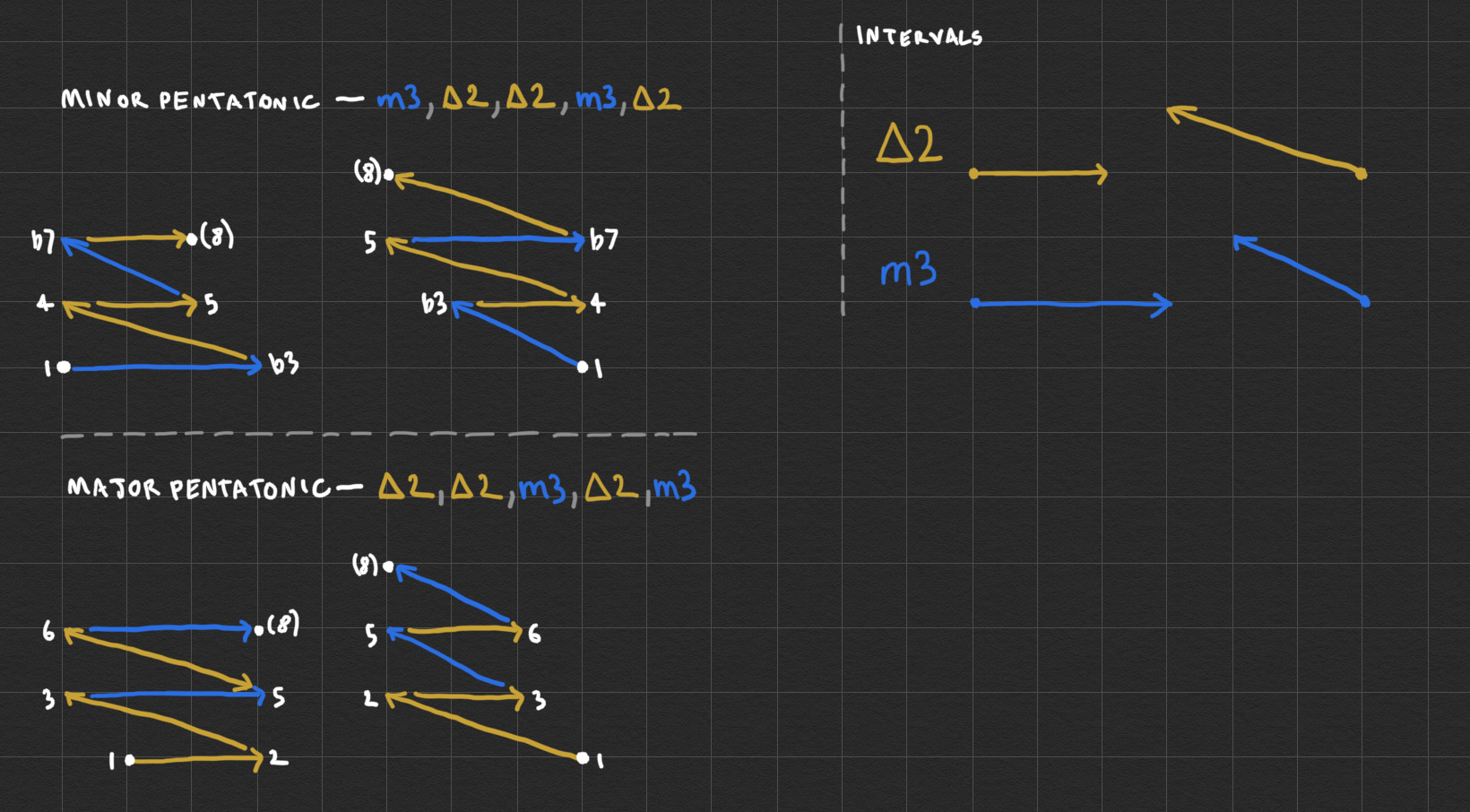
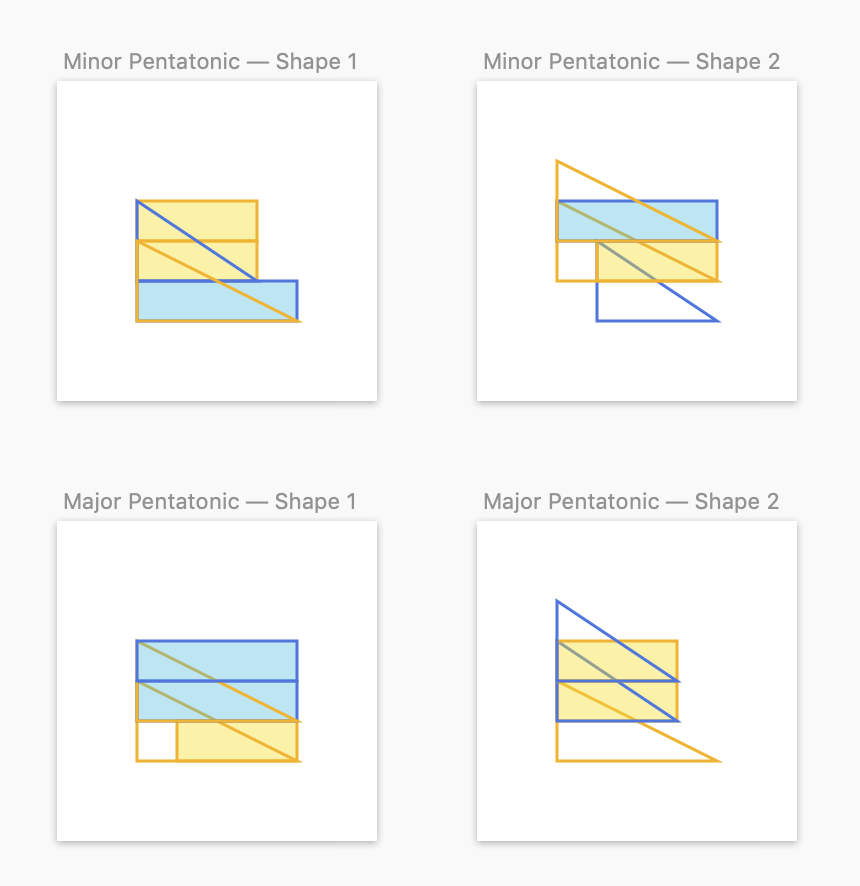
Since we're sharing... I started a project a while ago whose goal was to show how intervals could be visualized horizontally or vertically and then "stacked" or composed in different ways to create scales and chord shapes up and down the fretboard.
I didn't end up finishing the project but created some fun visuals...
Very nice! I have been working on a triad and inversion practice tool in React and may seriously consider rewriting it to use your component. https://porkloin.github.io/triad-practice-mk2/
Any chance that the fingering indicators can take text or color? I use that a lot in my current tool. Not to rush you with feature requests or anything :p
The best interactive guitar UI I've ever found is all-guitar-chords.com and I use several of its features regularly. It might not be built with the hotness but the reverse scale and reverse chord features are really nice and the main use case I can think of for using something like this. I'd like to see this as an open source library and I've started on attempts several times but never finished.
I think what would be cool is a "core" functional library written in typescript with all the basic well-unit-tested functions that could be used across different js libraries.
Then, for react, a library like react-table that just exposes the functions via hooks (headless/agnostic to ui). then the user could implement the UI as they please using the hooks.
Edit: _Obviously_ this project looks really cool and I love react so I'll be playing around with it for sure. Props to the author.
I can't endorse all-guitar-chords.com enough. Arguably, it does need a modern facelift even though I'm fine with the old adobe flash look. But an all-guitar-chords-esque library to port to the UI of your choice is a pretty good idea.
Thank you for your great work! I see some wonderful potential educational uses for this. If you'd like further feedback, please don't hesitate to get in touch!
If there is anyone with experience on theming React components I would be really happy to have some ideas/help on how to add support for guitar themes/skins:
Very clever. Took me a second to figure out how to mute a string. I figured it out, and I can't think of a better way, but otherwise it was quite easy to figure out.


https://fretty.app
It‘s a work in progress but you can already play around with scales and different tunings